
June 4, 2026
Drug Consumption Rooms (DCRs) aren’t a new thing in Europe, with over 100 across the Continent, most being primarily located in Switzerland, Germany, Denmark, France, Norway, Spain and Greece.
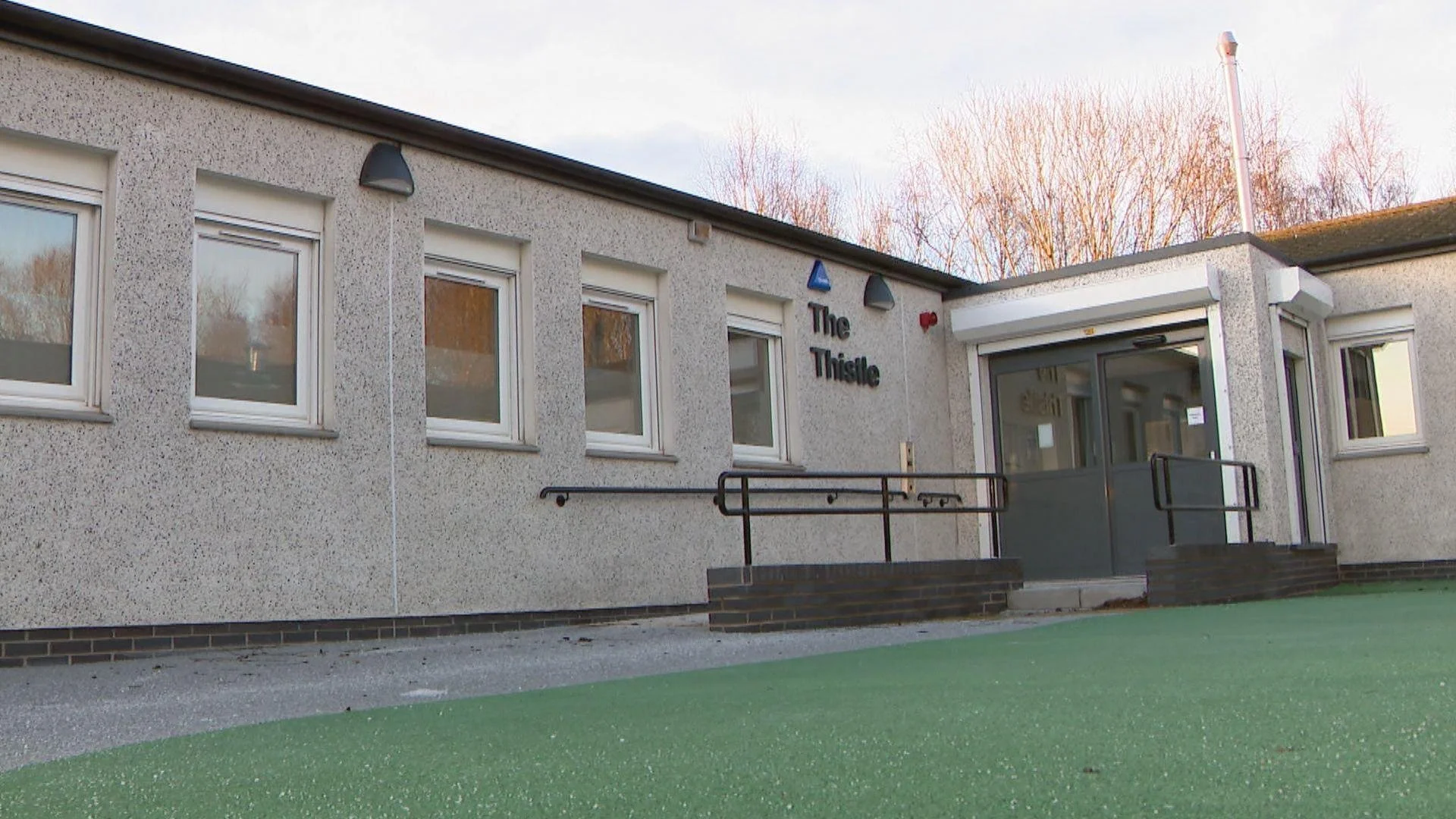
The most recent is The Thistle, located in Glasgow, Scotland, which opened in January 2025.
This wasn’t easy to achieve, however, as the first plans for opening the DCR were lodged back in 2016, after an HIV outbreak in the city. The UK Home Office quickly denied these plans because they went against the Misuse of Drugs Act 1971.
This denial led to Scottish drugs campaigner, Peter Krykant, setting up an unsanctioned mobile ‘drug consumption van’ in 2020. The running of the mobile unit and its ‘success’ in providing a safe place for drug users to consume substances helped provide evidence that a centre like this was feasible and needed in Glasgow.
In 2023, Scotland saw significant progress towards opening the DCR.
This was down to the Lord Advocate, Dorothy Bain KC, who announced that individuals would be charged with simple possession within a designated facility. This paved the way for the facility's approval in Glasgow.
It was then dubbed ‘The Thistle’ and opened in 2025 under a three-year pilot programme.
Since the centre opened, it’s had over 11,348 visits, with 575 users registered and 7,827 supervised injections of heroin and cocaine, according to data in a press release provided by the centre on the 13th of January 2026.
Glasgow City Council’s public relations officer, Vicky Bond, said: “The Thistle offers drug users a clean and safe environment in which to inject drugs, obtained elsewhere, under the supervision of nursing and social care staff, as well as access to other health and treatment services.”
She also said that out of the 11,348 visits, there had only been 93 medical emergencies, which were “all safely managed within the facility by staff” and resulted in zero deaths.
Even with those successes, the controversy around the DCR has only increased, with residents living around the facility claiming there has been a significant rise in anti-social behaviour and an increase in drug paraphernalia in the streets.
James and Juliet O’Pree, an elderly couple who live in the area surrounding The Thistle, said, “They've got shower facilities for them; they’re giving them a sandwich and tea; they're feeding them; they're letting them clean themselves. Why?
“They're just going to go back on the street and use more drugs. So, even the methadone programme doesn’t help.”
Juliet, who formally worked for Quarriers James Shields Project – an organisation that helped homeless people find accommodation – before Glasgow City Council pulled its funding in 2020, said that with the facility being so close to her house, she’s had multiple instances of finding drug users inside her tenement building.
“We live in a close [where] you've got the buzzer system and a fob. I've found them up my close using, and I phoned the housing. What the housing had said to me was, "You need to report it to the police.” This led to her feeling dejected by her housing association, as the couple believe it’s their responsibility to make the building safe.
This behaviour was also experienced by another local, who wished to only go by John, who said that just last week he’d found someone using inside his bins and that locals felt “threatened” by the facility being so close.
"The idea behind it is good,” James O’Pree said, “but it just attracts too many people who disregard needles into the street where… into the local community, where there's a lot of kids hanging out, a lot of kids are about, and I think it’d be better if it were more monitored.”
Juliet, however, remained strongly against it.
The divide within the community was apparent, as out of the ten people who were willing to discuss the facility, exactly half of them had a negative opinion of a DCR being in their area.
The common issues for this group were the rise of anti-social or threatening behaviour; the drug paraphernalia being found inside their tenements or gardens, and the belief that the money used to fund the thistle could be of better use elsewhere.
The other half all had the welfare of the users as their reasoning, reminding critics that users were people too, and said the location of The Thistle was “strategically” chosen as the clinic it was built next to was “always a drug addiction place, so there’s always been that clientele going in and out.”
Eddie Lochlan, another local to the area, said, "I've never seen a syringe in the street at all. I don’t see much litter; they [DCR critics] talk about rubbish lying about, but look at the place. If every street in Glasgow were as clean as this, the place would be a lot better. “I’ve not seen a syringe, not a junkie lying in the corner. There’s nothing, absolutely nothing.
Lochlan then went on to say that he’s never seen a single syringe or any paraphernalia in the area and said, "It's one of the cleanest streets in Glasgow.”
They all agreed that it was safer for the users to be in a controlled environment and that there was a clear drug problem in Glasgow, and if The Thistle had already saved over 90 people in its first year, it’s doing its job.
With this down-the-middle split in opinions, two tourists – one from Canada and one from England – gave their outside perspectives on drug consumption rooms.
Heather Arnold, originally from Toronto, Canada, said: “I think it’s a good thing. We have that in Toronto, too. It actually makes the whole community safer because there’s a place for people who go and do that, so they’re not out in the community and making it unsafe for other people.”
Paul, originally from London, said that he believes facilities such as The Thistle should be opened “everywhere” despite the UK government's opposition to DCRs.
So which side is correct? Is there a rampant anti-social spike, or is this just an exaggeration used to be weaponised against the facility and the SNP government, who approved it?
To try and better answer this question, a Freedom of Information request was sent to Glasgow City Council, which asked for details regarding complaints from residents surrounding disregarded syringes and paraphernalia.
The information showed that there had been a total of 156 instances of calls relating to the clean-up of syringes between January 2025 and January 2026. This is slightly down from the previous year prior to The Thistle opening, as there had been 187 reports made in August 2025 to November 2025.
The discarded syringes, partnered with a growing outrage among residents of Calton complaining about drug-related incidents or paraphernalia found in the streets, were the reason the location was chosen for Scotland’s first DCR.
John Mason, MSP for Glasgow Shettleston, agreed to sit down and discuss the facility’s impact on the local community.
“Well, I think it has definitely saved some lives,” Mason said about its effectiveness. “One life is important, obviously, but you can’t tell how many people would’ve died if they’d overdosed and they weren’t there, but the ones that have overdosed, who have been there, have clearly benefitted from it.
“If there’s [a] one-word answer, yes. It has been effective. It has saved some lives, but there are still too many lives being lost, not just in Glasgow, in Dundee, Edinburgh and other places as well.
“It’s a three-year pilot, and I think I’m keen that we stick to the three years and don’t rush to judgement.”
The Scottish Affairs Committee has launched an inquiry into The Thistle's effectiveness and what legal changes, if any, would be required for the facility to be made permanent.
Chair of the Scottish Affairs Committee, Patricia Ferguson MP, said in a press release:
“Scotland has the highest rate of drug deaths in Europe, and Glasgow is at the centre of this crisis. It's vital that things change and that both Governments work together to tackle problem drug use and stop people dying.
“This new inquiry is an important opportunity for us to look closely at how the facility reduces the harm caused by problem drug use and what legal changes might be needed if the facility is to be made permanent.”
John Mason highlighted that the centre was “never meant to be a silver bullet that would just solve everything” and that the main question was "Can it help people?” which he answered, “I think it has. Therefore, yes, it’s been effective.”
The most recent incident surrounding the DCR is a body being found outside on March 8th, 2026.
The police have not officially commented on the cause of death; they have only confirmed that the death was not being treated as suspicious.
When asked about the death, Mason suggested that the facility may benefit from longer opening hours and that if the person had been inside the facility, “maybe a life would’ve been saved.”
This death also resulted in the Scottish Conservatives' shadow drugs and alcohol minister, Annie Wells, releasing a statement during the launch of a new policy paper on March 9th.
Wells referred to The Thistle as an "SNP experiment” that had “monumentally failed” to curb drug deaths in Scotland.
She said: “Scotland’s appalling level of drug deaths is our national shame under the SNP.
“Yet nationalist ministers still believe they know best how to tackle this crisis – despite having failed miserably over the last two decades.
“Their latest approach is to double down on state-sponsored drug-taking facilities, like The Thistle in Glasgow, and roll out more of them across the country.
“The Thistle has monumentally failed to reduce our drug-death rate, which is the worst in Europe, and we believe it should be shut down.”
While this is a sound argument against The Thistle, it has saved at least 93 lives directly and may have saved countless more through advocacy and referrals.
A 58-year-old local man, who chose only to go by John Doe, gave personal testimony on how The Thistle saved his stepson's life by advocating for him at the homeless shelter, which resulted in him getting access to supported accommodation. Something that can be challenging for addicts to achieve.
“The worker was an ex-user, and he knew my stepson from a long, long time ago. So, he advocated for my stepson so that he could get into supported accommodation, whereas there was another guy in the homeless unit at the same time, and he just got put on the streets because there was nobody advocating for [him].”
Testimony like this is hard to find when it comes to discourse around the facility, as many tend to focus purely on the numbers rather than the human impact that it’s having.
Its current location could also be a factor in its low use.
This was brought up by James and Juliet O’Pree, who, despite being overwhelmingly against it, said that it could have been of better use on the main Gallowgate road instead of tucked away on Hunter Street. This could have resulted in more users, as it would be in a more easily accessible location.
This idea, while logical, could also result in more issues, as placing a DCR on a main road could cause more friction between the residents, businesses and the users.
The clear answer for solving Scotland’s drug deaths will always be a complex and complicated one, but as the research shows, The Thistle is working. 93 lives saved by one centre in its very first year in operation is nothing to be scoffed at.
Taking the accounts and the data into consideration, more DCRs are opening across Scotland, which we are already seeing in Dundee and Edinburgh, paired with new rehab centres, but with more safety mechanisms, like patrols and a strike-based ban system, may be the way forward in the ongoing battle against drug deaths in Scotland.